
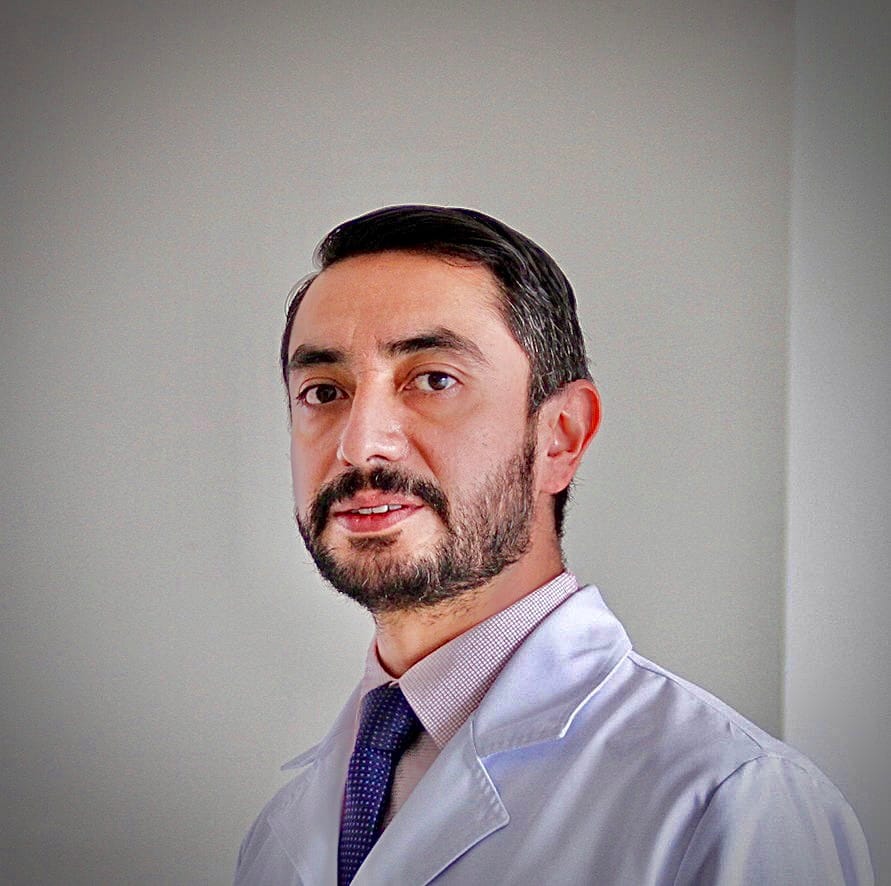
A conversation with Dr. Manuel Alejandro Díaz Carrillo, Medical Director of Hospital MAC San Miguel de Allende.
Planning a consultation involves more than finding a hospital. The medical director explains what to prepare, how assessments and referrals are coordinated, what to ask about language and costs, and how to obtain records for follow-up.
Editorial note: These are the hospital's descriptions of its services and processes, not an independent assessment of clinical quality, suitability, insurance coverage or availability for a particular patient. Confirm the services, professionals, communication arrangements and costs for your own appointment. Do not delay emergency care to assemble paperwork or read a planning guide.
Interview by Ken Gardner. Answers supplied in Spanish through Ana Laura Robles Galíndez, translated and edited for clarity. The complete English draft was approved through Hospitales MAC before publication.
1. What services does this hospital provide, and when is referral needed?
The hospital provides medical and surgical care for scheduled and emergency cases. Our emergency service can receive, assess, stabilise and treat a wide range of acute conditions, including trauma, heart attack, stroke, sepsis and other medical or surgical emergencies.
If a patient needs a procedure, technology or subspecialty unavailable here, referral is coordinated with a centre that has the necessary capacity, once the patient's clinical condition permits a safe transfer.
2. What information helps before a first appointment, and how should it be shared?
For a scheduled consultation, useful information includes relevant medical and surgical history, allergies, current medicines and doses, previous diagnoses and recent laboratory or imaging studies related to the reason for the visit, where available. Insurance information is also useful if the patient has a policy.
Documentation can be shared in advance through the institutional channels specified when the appointment is arranged. In an emergency, missing information should not delay care.
3. How are consultation, tests and follow-up coordinated?
Care begins with a medical assessment. Based on its findings, the doctor decides which studies are necessary and whether the patient can continue as an outpatient, needs specialist evaluation or requires hospitalisation.
Where possible, tests and assessments are coordinated during the same stay. Some procedures or specialist consultations need later scheduling. The aim is for the patient to understand the plan and next steps before leaving, rather than assume everything can be completed in one visit.
4. How should patients confirm English-language care, accessibility and companion support?
Hospital MAC San Miguel de Allende has English-speaking patient-services staff, and most of our doctors can also provide care in English. Patients should describe their specific communication, accessibility or companion needs when requesting an appointment or on arrival, so support can be coordinated according to the patient's clinical condition and each area's policies.
Editorial planning prompt: Confirm the language support available for your particular appointment and any interpreting arrangements before relying on them.
5. What should patients request in writing about costs and insurance?
Before a planned procedure or admission, ask for an estimate identifying included hospital services, medical fees where applicable, tests, medicines, materials, possible advance payments and items that may incur additional charges.
Patients with medical-expense insurance should confirm policy conditions, deductible, co-insurance, hospital network and authorisation requirements. Final coverage depends on the terms contracted with the insurer.
6. How do patients obtain records and organise follow-up, and when is emergency care appropriate?
After care, patients can request results, instructions and a medical summary through institutional processes. If follow-up is needed, recommendations and the type of specialist responsible for continuing care are established, either locally or after returning home.
A scheduled consultation is appropriate for stable conditions, follow-up or elective tests. Warning symptoms or a potentially serious condition, such as chest pain, significant breathing difficulty, sudden neurological changes, loss of consciousness, significant bleeding or serious trauma, call for direct emergency care. These examples are not an exhaustive list.
About the contributor
Dr. Manuel Alejandro Díaz Carrillo is Medical Director of Hospital MAC San Miguel de Allende. His supplied biography describes specialisation in Emergency Medicine and Critical Care, training at UNAM, Mexico City's Health Secretariat and Fundación Clínica Médica Sur, and a master's degree in management of health institutions from Universidad Anáhuac.
His work focuses on emergency and critically ill patients, including bedside clinical ultrasound, haemodynamic monitoring and mechanical ventilation. The supplied biography also describes scientific publications, book chapters, research and teaching at national and international conferences.
Hospital website: Hospitales MAC

About the Author
Ken Gardner develops and curates MexPat Guide from Vancouver, Canada. He focuses on Mexico relocation research and practical comparison questions. This is educational planning information, not a claim of local residence or individual immigration advice.
Useful next interviews
- Read the interview: Planning a medical consultation in San Miguel de Allende: bring your history and agree the follow-upShared article location: San Miguel de Allende
- Read the interview: Choosing Health Insurance in Mexico: Questions Beyond the PremiumBroader planning: Countrywide
More interviews about life in Mexico
Published