
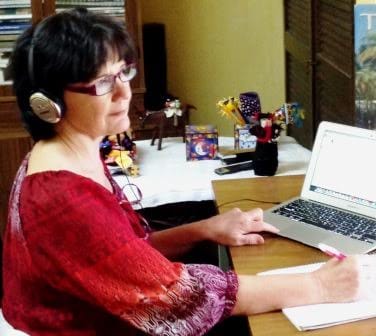
Academic Director, ASLI – Spanish Language Institute
Translated from Spanish and edited for clarity. Reviewed and approved by Maru Cortés.
A holiday can introduce you to Cuernavaca’s gardens, food and cultural attractions. A longer stay gives you a different set of questions: Can you walk to the places you use? What happens to your journey when it rains? Does the home’s water supply and internet meet your needs?
María E. Ramos, known as Maru Cortés, is Academic Director of ASLI – Spanish Language Institute in Cuernavaca. In this MexPat Guide conversation, she explains how studying Spanish, staying with a host family and following an ordinary routine can help prospective residents test whether the city suits them.
What do people discover after several weeks that they may miss on holiday?
On holiday, it is easy to focus on the climate, gardens, food and tourist attractions. After several weeks, you begin to understand everyday life: schedules, traffic, actual travel distances, differences between neighbourhoods, and the importance of building relationships with neighbours and local shopkeepers.
Cuernavaca is not one uniform experience. Some areas are quiet and green; others have more activity, noise and movement. At the same time, people often begin to feel part of the community when they return to the same market, café or shop and become familiar faces. That sense of belonging rarely develops during a short visit.
How should someone choose an area or a place to stay?
There is no perfect neighbourhood for everyone. I recommend comparing places according to the routine you will actually have, rather than choosing only by appearance or price.
Try the journey between your accommodation and the school, supermarket, pharmacy, restaurants and medical services at the times you expect to use them. Consider slopes, pavements, lighting, noise and how easily you can find transport.
The centre puts many cultural and commercial places close by, but it tends to be busier. Some residential areas offer more peace and greenery, although you may need transport. For someone with limited mobility, it is particularly important to check stairs, changes in level and street conditions in person.
For people coming to study Spanish, staying with a host family initially can be an excellent way to get to know daily life before renting independently. At ASLI, we offer this option and try to match the family to each student’s needs and preferences.
What should visitors test about walking and getting around?
I recommend trying journeys on foot and using transport at different times of day. A route that feels straightforward in the morning may be different in heavy traffic, at night or during intense rain.
Conditions also change from one street to another. Some areas are pleasant for walking; elsewhere, pavements may be narrow, uneven or sloping. Try several transport options and ask local residents which routes are most practical. At night, many people prefer to use Uber.
Rather than making general statements about the whole city, assess the particular journeys that will form part of your routine.
How can someone participate respectfully in the community while still learning Spanish?
You do not need perfect Spanish to start connecting with people. Greeting others, learning their names and using simple expressions such as buenos días, por favor and gracias can open many doors.
I recommend shopping at local markets and businesses, attending cultural activities, and talking with neighbours and host families. It is also important to listen, observe local customs and ask permission before photographing a person or a traditional activity.
Spanish classes can help considerably. At ASLI, we combine language learning with cultural experiences and real-life situations so that students do not remain isolated within an exclusively foreign community.
What should people notice about the climate, noise and household services?
Cuernavaca is known for its pleasant climate, but conditions vary with the seasons. During the rainy season, there can be heavy downpours, usually in the afternoon or evening. There are also periods that are hotter, drier or more humid than a visit of a few days might reveal.
Noise depends greatly on the location. In some areas, you may hear traffic, dogs, music, bells or fireworks associated with celebrations. That is why I recommend visiting accommodation both during the day and at night.
Check the water pressure and availability, whether there is a water-storage cistern, the internet connection, mobile-phone reception and rubbish collection. Conditions can differ even between houses in the same neighbourhood. Speak with current residents and, if possible, try the area during the season when you expect to live there.
Can you share an example of how a longer stay changes someone’s decision, and three checks to make before committing?
This is a composite example based on several students’ real experiences, rather than the story of one individual. It describes a woman who arrived believing that previous holidays had given her a complete picture of Cuernavaca. After several weeks of studying, living with a family and carrying out everyday activities, she confirmed that she liked the people, climate and pace of life. She also discovered that the choice of neighbourhood mattered much more than she had expected.
Instead of making an immediate permanent decision, she chose to return for a longer stay and look for an area where she could walk to classes and the services she used. The experience did not give her a negative view of Cuernavaca. It made her expectations more realistic and helped her make a better-informed decision.
Before deciding, I recommend three checks:
- Spend several weeks living as a resident, rather than only as a tourist, ideally taking classes, shopping and following a normal routine.
- Test your actual journeys during the day, at night, in busy traffic and, if possible, when it rains.
- Check the accommodation directly, especially water, internet, noise, accessibility, transport and distance to essential services.
For someone considering life in Cuernavaca, several weeks as a student can be a useful trial. It offers a chance to improve your Spanish, build local relationships and experience the city with support, without immediately making a long-term decision.
About Maru Cortés
María E. Ramos, known as Maru Cortés, is Academic Director of ASLI – Spanish Language Institute in Cuernavaca, Morelos. She has worked with international students of different ages and language levels, helping them develop their Spanish through personalised classes, host-family stays and cultural immersion in Mexico and other Spanish-speaking countries.
Visit ASLI – Spanish Language Institute
Photo credit: ASLI – Spanish Language Institute, Cuernavaca, México.
Useful next interviews
- Read the interview: Checking Advice Before You Act in Mexico: A Q&A with Fran PoblannoBroader planning: Countrywide

About the Author
Ken Gardner develops and curates MexPat Guide from Vancouver, Canada. He focuses on Mexico relocation research and practical comparison questions. This is educational planning information, not a claim of local residence or individual immigration advice.
Published