
Make a working note: Prepare a property or project enquiry
Renovating a Home in Mexico: A Practical Q&A with EASE
Alonso de la Fuente and Rachelle of EASE discuss buying thoughtfully, planning renovations and creating a home that works for everyday life in Mexico.
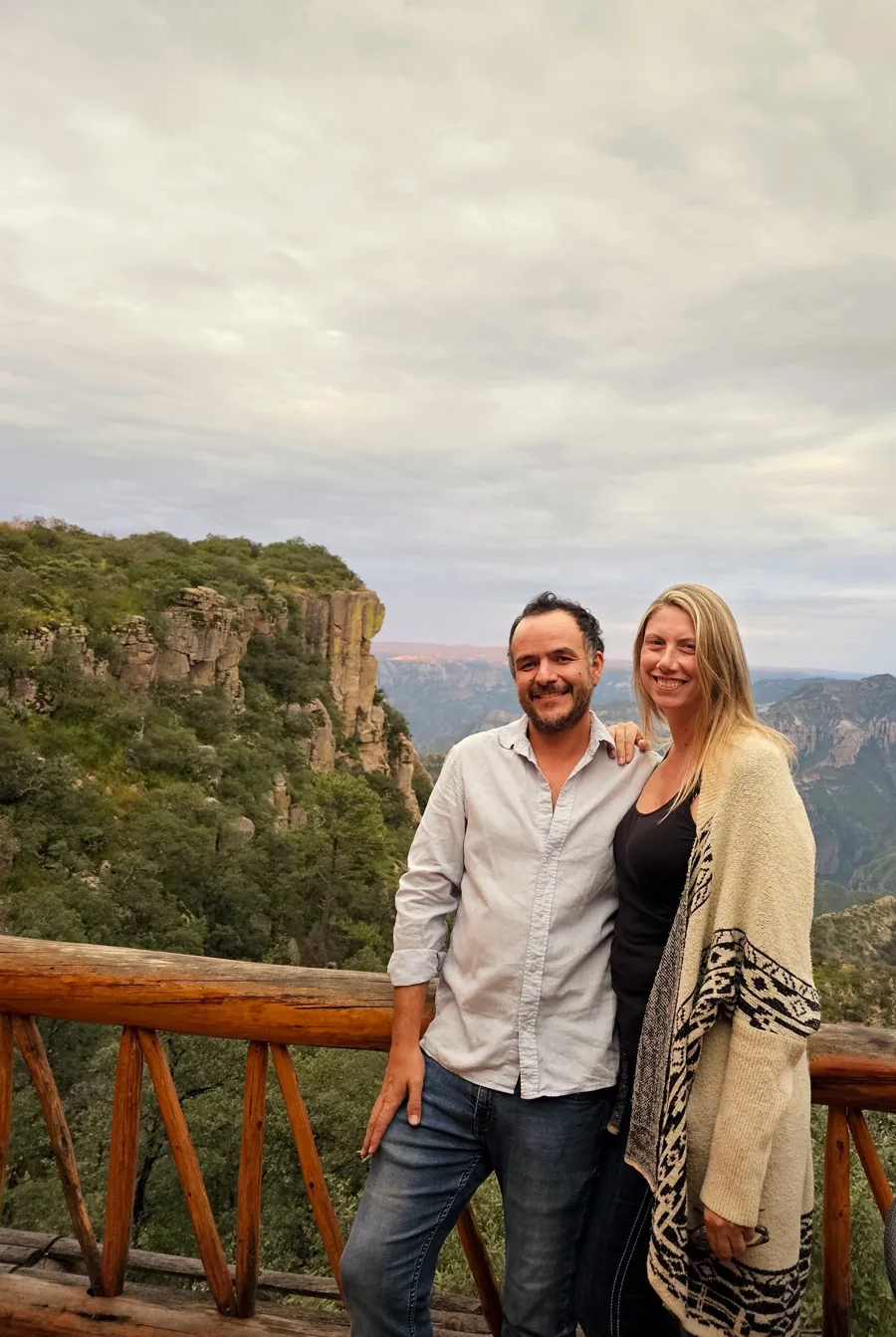
For Alonso de la Fuente and Rachelle, co-founders of EASE, questions about choosing and renovating a home connect their professional work with their own experience of creating a life in Mexico. Based in Riviera Nayarit, they bring together Alonso’s background in industrial design, construction and project management with Rachelle’s experience in business strategy and making the move from the United States.
Buying or renovating a home in Mexico begins with understanding how you want to live. A home can look perfect during a viewing and still leave plenty of questions unanswered. How does it handle the rainy season? What does the neighbourhood sound like at night? And if you want to renovate, what might be hiding beneath the floor?
We asked them about choosing a home, working with contractors, planning for surprises and settling into a community. Their answers draw on projects in Mexico City and Riviera Nayarit, with particular insights into coastal living. Conditions vary by location and property, but many of the questions they encourage newcomers to ask are useful wherever you’re considering a move.
In this interview
What We Learned About Making a Life in Mexico
What did each of you underestimate about building a life in Mexico?
Alonso: I underestimated how much of what felt completely normal to me depended on relationships, trust, and simply knowing how things work here. In construction especially, informality is common, and I was part of it. I’m an industrial designer, but on projects I often became the designer, contractor, project manager and purchasing department, paying workers and keeping track of everything in a notebook as I learned along the way. It worked because I knew the people and understood the culture.
Living with Rachelle made me see how uncertain that can feel from the outside. She brought more structure to the way I was already working: clearer expectations, documentation, budgets and communication. With EASE, we try to provide the standards our foreign clients are accustomed to without losing the warmth, flexibility and personal relationships that make things work here.
Rachelle: What I underestimated was how often there simply isn’t one established way of doing things. I experienced much more of a handshake culture and had to learn to ask questions instead of assuming I knew the rules.
Even renting taught me that. In my first apartment, rent was due each month on the date I moved in, so I assumed that was how it worked. At the next, they prorated the month and rent was due on the first. Another small misunderstanding over the deposit happened simply because the owner and I each assumed the other understood how it was supposed to work.
That’s something I bring to EASE constantly: don’t assume, ask.
Often no one is doing anything wrong. You’re simply operating from two different sets of expectations.
Rachelle, co-founder of EASE
Buying in Riviera Nayarit: Start with Everyday Life
What should someone work out before looking at properties in Riviera Nayarit?
Alonso: I’d start by saying, “Tell me about your life.” Do you like to walk? Do you want stores and services nearby? Are you looking for community and nightlife, or quiet and privacy? Even wanting a pool can mean different things: your own private space, or a resort-style pool with services and people around you.
I want to understand what they aren’t willing to sacrifice and where they’re looking for a little adventure. From there, we can start narrowing down where they might actually be happy. If having a supermarket nearby is important, I probably wouldn’t start with San Pancho. If they want peace and quiet, I probably wouldn’t start with Sayulita.
But you still need to experience a place before making a major commitment. Walk it without tourist eyes. Rent if you can. Buy groceries, drive around, spend ordinary days there. Don’t just visit the place you might live. Try living there.
Viewing a Home in Mexico: What to Check Beyond the Finishes
What’s easy to overlook when you fall in love with a home?
Alonso: I’m looking beyond how the house feels that day and thinking about how it will actually function year-round. Orientation matters for natural light and for how hot different spaces will get. I’d check the water system: cistern, tanks and pressure, and ask what happens during rainy season. Are there leaks? Does the street flood?
I’d also want to visit at night. A peaceful street at 11 a.m. can be a very different place at 10 p.m.
Then I look at the house through the client’s lifestyle. Maybe there’s no AC in the living areas, or they expect a dishwasher or garbage disposal. Those things aren’t standard in many Mexican homes. Can those be added, and what would it actually involve?
Before you fall in love with what a house is, understand what it will take to make it work for the way you live.
Renovate or Keep Looking? Understanding the Risks
When does renovating make sense, and when should someone keep looking?
Alonso: The real question is how much time, money and uncertainty you’re willing to take on.
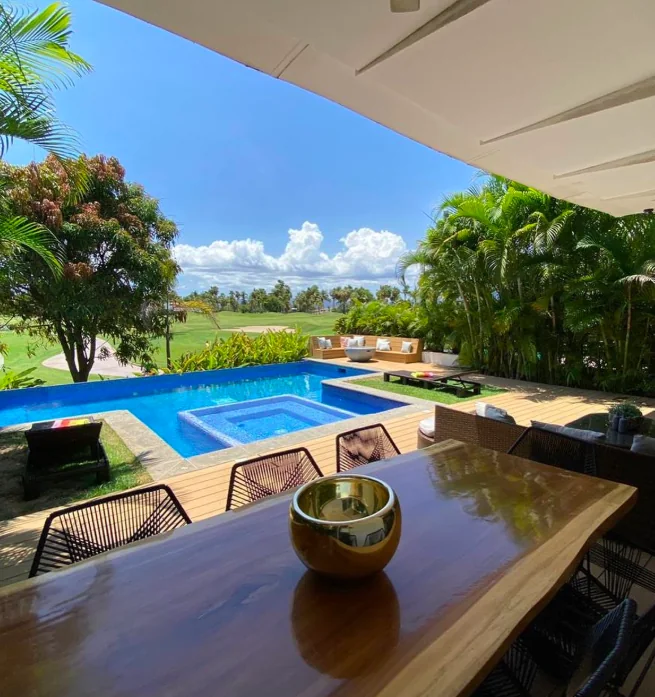
If a home can become what you want through finishes, carpentry, lighting, furniture or changes to some walls, I’m usually comfortable exploring how to adapt it. Once you’re talking about major plumbing, adding a large cistern, building a pool, adding another floor or changing the structure, it may still be possible, but the risks increase.
One particular challenge in Mexico is that you often don’t know exactly what you’ll find when you open a wall or make a hole. Electrical and plumbing plans frequently don’t exist, especially in older or previously remodeled homes. You might uncover perfectly good plumbing, or a hose or electrical wire buried directly in the concrete.
You need to understand how many unknowns you’re buying along with the house.
Check local requirements: For projects in Bahía de Banderas, consult the municipality’s urban development and construction procedures and confirm which permissions apply to your property and scope of work.
Hidden Renovation Costs: Where Budgets Can Change
What costs tend to surprise people?
Alonso: Unexpected costs often come from logistics and from things you simply couldn’t know when the first estimate was made. That’s why we always recommend keeping a contingency in the budget.
Delivery is a good example. Buying something is one thing; getting it where it needs to go can be another. On one project, a client bought a beautiful marble bathtub. When it arrived, we realized there was simply no human way to move it through the house to the terrace on the opposite side. We ended up needing a crane to lift it over the house and into place.
There can also be additional cleaning, installation, transportation, permitting and administrative costs, particularly when something needs to happen quickly or an issue arises with local authorities.
Some costs simply aren’t visible at the beginning of a project. You discover them when the situation is right in front of you. That’s why having room in the budget for the unexpected matters.
Hiring Contractors in Mexico: What to Agree Before Work Starts
What should homeowners clarify with a contractor before work begins?
Alonso: Before work begins, get clear on the scope, what is and isn’t included, materials, payment schedule, timeline, who is responsible for purchases, and how changes or additional costs will be handled.
Contractors in Mexico work in different ways. Some quote by concept and include materials, handling the purchasing themselves. That can make deliveries and supplies much more fluid. Others can work with a more transparent purchasing process, where the client sees and approves each purchase directly. Some clients may even prefer to pay for materials themselves by credit card to manage their cash flow. All of those approaches can work.
The important thing is to ask everything, even the questions that feel obvious, and make sure you actually understand the process you’re agreeing to. Then keep communication consistent throughout the project, especially around changes, costs and decisions.
If something makes you uncomfortable before the work starts, it will probably make you much more uncomfortable once your house and money are involved. Ask now.
A Hidden Problem Beneath a Mexico City Kitchen
Can you share a project where an unexpected discovery changed the plan?
Alonso: During a renovation of my own home in Mexico City, we were replacing the kitchen floor. Once the old flooring came up, we noticed a slight depression and some moisture. My contractor suggested we stop and open it up to see what was happening underneath.
We discovered a cavity more than three meters across and about a meter deep beneath the kitchen. A small water leak had gradually washed away and compacted the soil below the slab, leaving a huge void. Had we simply installed the new floor, eventually part of the kitchen could have collapsed.
So the renovation stopped. We addressed the leak, filled and stabilized the ground, and only then went back to the original plan.
The lesson is that when something unexpected appears, don’t rush to cover it up just to keep the project moving.
Sometimes the small thing you can see is telling you about a much bigger thing you can’t.
Alonso de la Fuente, co-founder of EASE
Coastal Homes: Choosing Materials for Humidity and Salt Air
What should people consider when furnishing a coastal home?
Alonso: On the coast, you have to design for humidity first. Materials that work perfectly well elsewhere can deteriorate surprisingly quickly here. Synthetic leather can literally start to crumble, natural leather can stain, and some wood finishes can scratch or deteriorate as moisture gets underneath them.
I prefer tropical hardwoods that are naturally suited to the climate, often finished with oil rather than completely sealed in polyurethane.
Hardware and anything with moving mechanisms are also places where quality matters. Humidity and salt air are unforgiving, and cheaper components can corrode or fail quickly.
Even water matters. In our experience here, it tends to be mineral-heavy, so something as simple as a large glass shower enclosure can become a maintenance decision, not just a design decision.
At the coast, I’d rather choose something that will age beautifully than something that only looks beautiful the day we install it.
Alonso de la Fuente, co-founder of EASE
Furnishing a Home in Mexico: Buy Locally or Bring It?
What’s worth bringing from abroad, buying locally or having made?
Alonso: I’d bring things that have real sentimental value, but I wouldn’t necessarily move an entire household. Even sentimental pieces may need some treatment or adaptation to handle the coastal climate.
There are smaller things I still think are worth buying in the U.S.: bedding, kitchen utensils, hangers and some everyday household items. They can be less expensive and sometimes better quality.
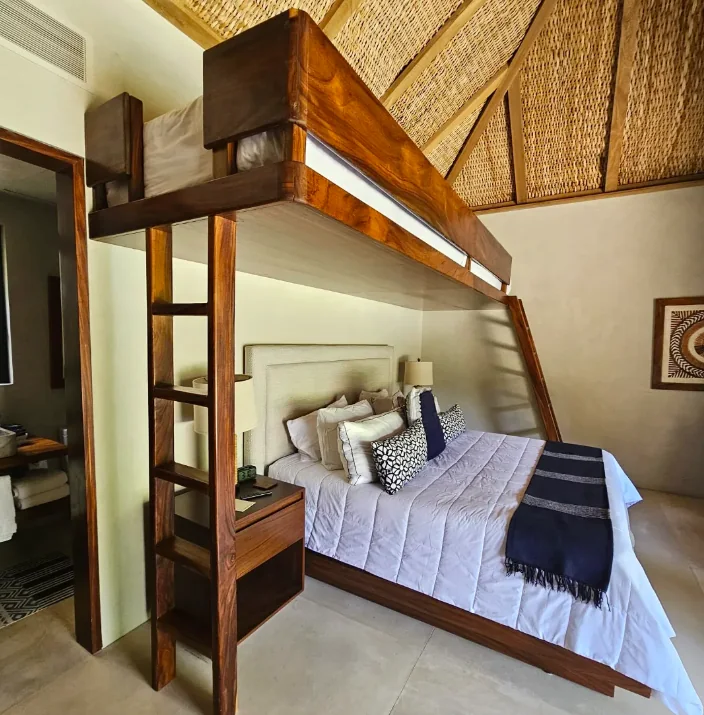
For furniture, I often prefer buying or making it here. Local carpenters understand the materials and climate, and custom work gives us much more freedom to solve a space.
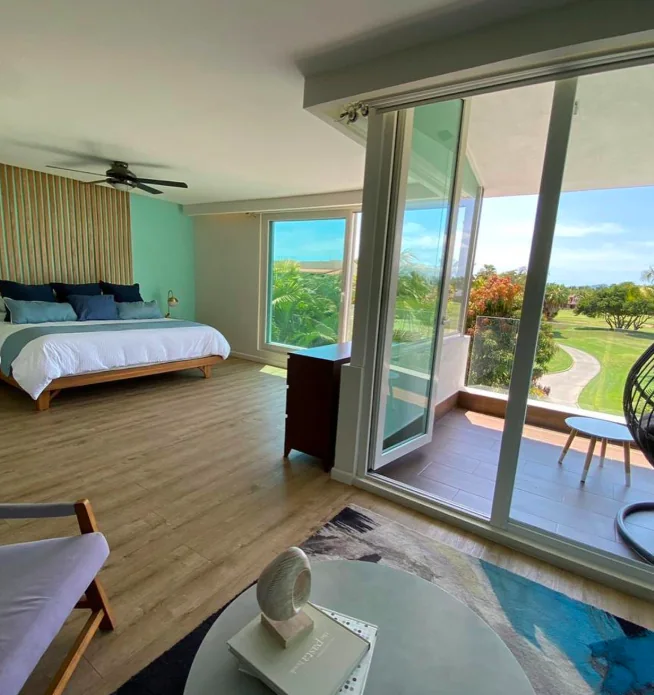
In one project, I designed a wooden wall made of horizontal slats that rotated individually on their own axis. The room could remain open and airy most of the time, then completely close when we wanted darkness and air conditioning.
That’s where custom work becomes really valuable. You’re not searching for something that fits the space; you’re creating exactly what the space needs.
What to buy locally and what to bring
MexPat Guide’s summary of Alonso’s advice, with additional planning prompts.
Source locally
- Furniture sized for your rooms and everyday routines.
- Custom carpentry from makers familiar with local materials and conditions.
- Wood furniture and finishes chosen for coastal humidity and maintenance.
- Pieces you can inspect and discuss with the maker before ordering.
Bring or source from abroad
- Sentimental pieces, allowing for any adaptations the climate requires.
- Bedding, kitchen utensils, hangers and small household items when price and quality justify it.
- Items unavailable locally, after comparing delivery and total costs.
- Favourite pieces you will use regularly, rather than your entire household.
Compare individual products, transport costs and suitability for coastal conditions. Buying abroad is not automatically cheaper or better.
Finding Your Feet and Building Local Relationships
What helps newcomers feel at home and build good local relationships?
Rachelle: People, mostly. And a hundred little things. Finding a hairstylist. Having our favorite restaurants and knowing the people there. Knowing where to find what I need. Learning the back roads as well as I knew them in my hometown. It wasn’t one moment when Mexico suddenly felt like home. It was a collection of ordinary moments when I started realizing, “Oh. I live here.”
Alonso: I think the most important thing is curiosity. Don’t assume things should work the way they did where you came from, but also don’t arrive expecting the worst or expecting everything to cost less simply because you’re in Mexico.
Ask why. Be interested in how people do things here. Be willing to learn before deciding something is wrong. When you approach people with curiosity and respect instead of assumptions, it’s much easier to build the kind of trust that good working relationships here depend on.
Planning a longer stay? Explore our Mexico residency guide for the practical side of the move.
Managing a Renovation in Mexico from Abroad
What needs to be in place to manage a renovation from another country?
Alonso: Managing a renovation remotely starts before the client leaves. We need a detailed approved budget and as many important decisions made in advance as possible, especially materials, colors and textures that can look very different on a screen than they do in person.
After that, communication and trust have to be very strong. I need to understand the client’s taste, expectations and quality standards well enough to make smaller decisions confidently on their behalf, while being very clear about which decisions still need their approval.
Not everything has to be decided immediately. If something won’t affect the sequence of work, we can sometimes wait until the client is back rather than making an important choice remotely.
The goal isn’t to make every decision from a distance. It’s to make the right decisions early enough that the project can keep moving when you’re not here.
How EASE Helps with Buying, Design and Renovation
How does EASE help, and what should someone bring to a first conversation?
Alonso: Our first conversation is really about understanding what you’re trying to create: how you want to live, where, your budget, and what you need help with. From there, EASE can stay with you through as much of the process as you need.
We can help identify properties and guide you through the purchase, bringing in lawyers, notaries or other professionals when needed. We handle design directly, and coordinate architects, engineers, contractors and specialized trades for construction. We can also manage custom furniture, sourcing, local artisans, art and installation.
If the property will be rented or marketed, we can handle the branding and coordinate photography and launch strategy, then connect you with trusted property managers for ongoing operations.
You don’t need to arrive at the first conversation with everything figured out.
Bring us what you know: what you want, what you’re worried about, your timeline and your budget. We’ll help you figure out the rest.
About the contributors & how to connect
Alonso de la Fuente and Rachelle are the co-founders of EASE, a property advisory and project direction studio based in Riviera Nayarit. Their work spans buying, renovating, designing and developing projects in Mexico.
Explore EASE’s services and project stories.
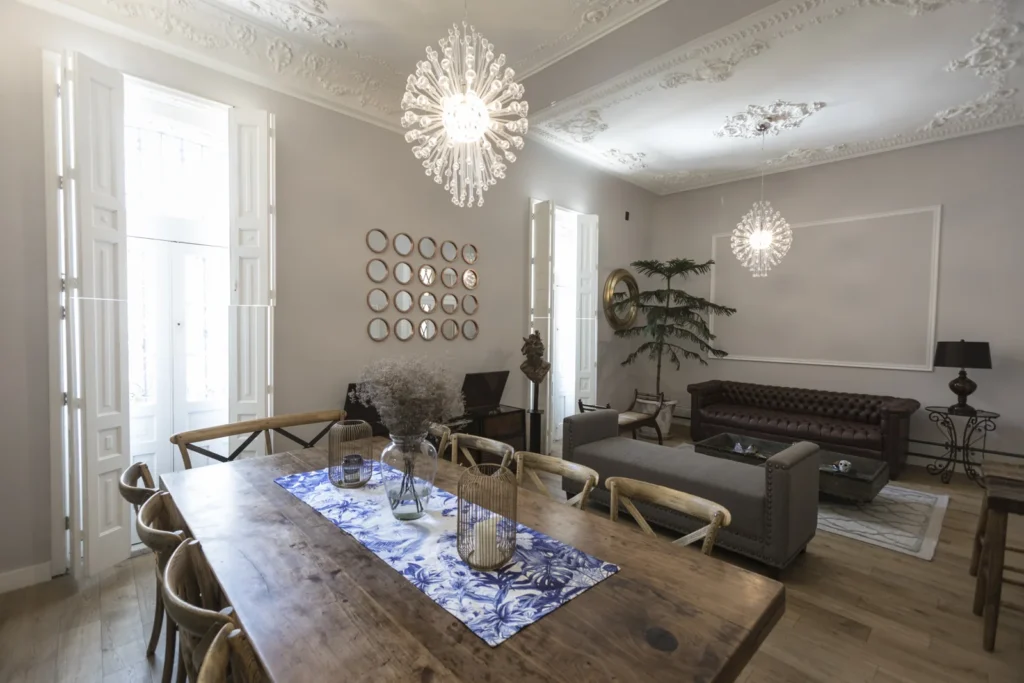
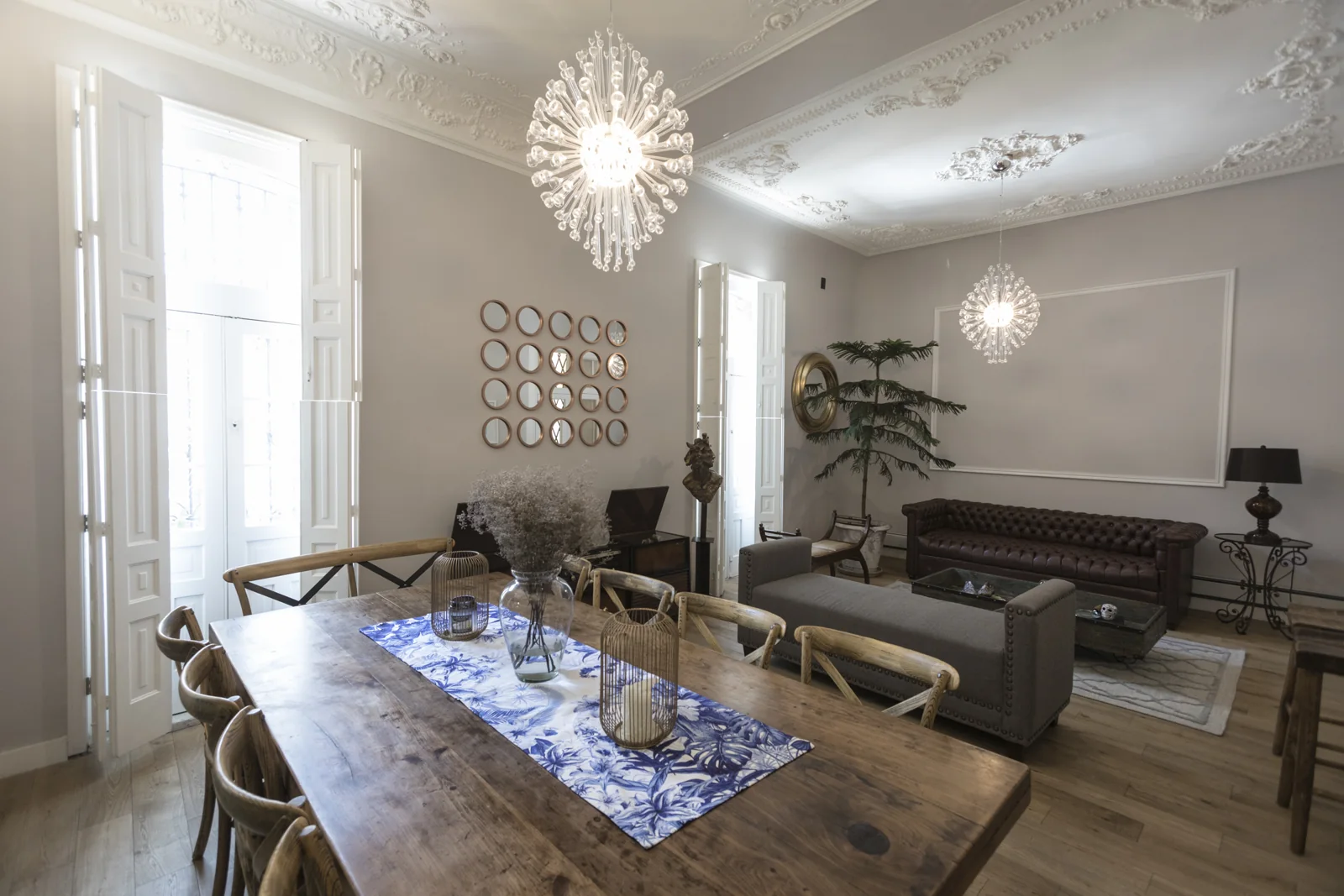
Explore the Pomona project in Colonia Roma, Mexico City, shown in the project photo above. Alonso de la Fuente handled its design, construction and project management.
Have a home in mind or questions about where to begin?
Start with your preferred location, budget, timeline and the parts of the process you need help with.
Connect with EASEPlan your next steps
Include access to care in your location planning with our guide to healthcare in Mexico. For the everyday side of settling in, explore our guide to building a social life in Mexico.
This conversation is part of Expert & Local Insights, our interview series with professionals and local voices on life in Mexico.
Interview developed by Ken Gardner for MexPat Guide in collaboration with Alonso de la Fuente and Rachelle of EASE. Answers and project details reviewed by EASE. All photographs supplied by EASE and published with permission.

About the Author
Ken Gardner develops and curates MexPat Guide from Vancouver, Canada. He focuses on Mexico relocation research and practical comparison questions. This is educational planning information, not a claim of local residence or individual immigration advice.
Published · Reviewed
Prepare a property or project enquiry
Leave with one recorded question, the evidence you have and a next action. Unknown is a useful answer; a completed note does not confirm eligibility, suitability or an arrangement.
Fictional example: The quote includes labour but does not name the materials or exclusions. Next: request an itemized scope and independent review before committing.
Write and download a working note
Keep entries general. Do not enter account numbers, identification numbers, health details, phone numbers or access codes. Use private records and the recipient’s agreed channel for sensitive information.
Off by default. Without saving, entries disappear on reload. Saved notes can be seen by anyone using this browser profile. Download for use elsewhere. This note has no submission button; ordinary site analytics still apply.
Download your notes before leaving.
Clear these entries and their saved copy in this browser?