
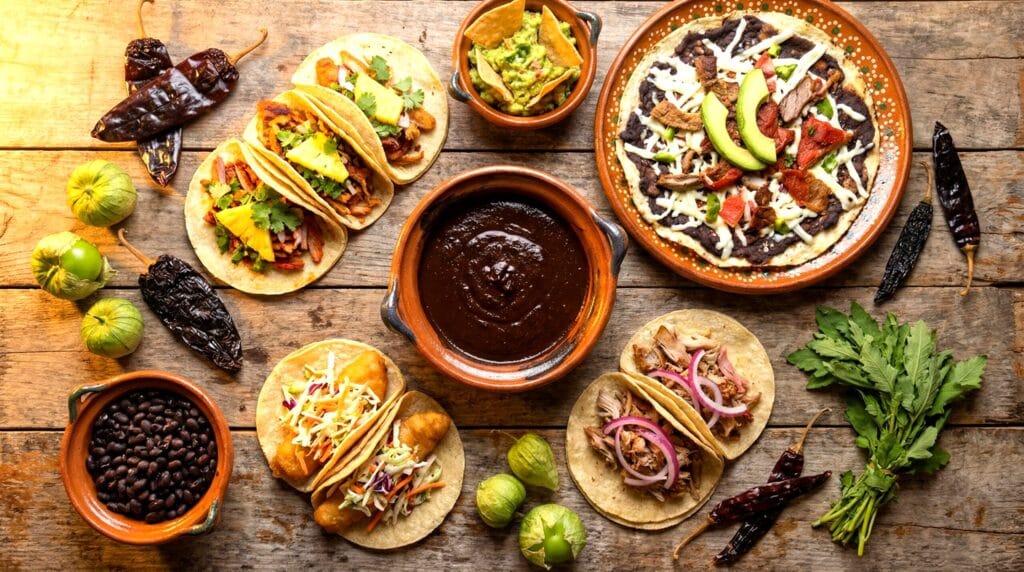
TL;DR: Mexican cuisine is a rich tapestry woven from indigenous (Aztec, Mayan) and Spanish influences, resulting in seven distinct culinary regions. This guide demystifies the core ingredients like corn, chiles, and beans, explains the differences between the food of Oaxaca and Northern Mexico, and provides a simple pronunciation guide to help you order with confidence.
Immediate Action Steps:
- Start with the staples: Understand that corn (maize) is the heart of the cuisine, forming the base for tortillas, tamales, and more.
- Explore by region: Don’t assume all Mexican food is the same. Use the guide below to try a dish specific to the region you’re in (e.g., cochinita pibil in the Yucatán, carne asada in the North) — see our top places to live in Mexico guide.
- Embrace the chiles: Learn to ask about the spice level. A dish’s flavor is defined by the type of chile used, not just the heat.
- Use the pronunciation guide: Practice saying a few key terms like queso (keh-so) and jalapeño (ha-la-pen-yo) to feel more comfortable ordering.
Who Is This Guide For?
This guide is for the curious traveler, the new expat, or anyone who wants to move beyond the Tex-Mex basics and understand the soul of authentic Mexican food. If you’ve ever felt overwhelmed by a Mexican menu, wondered why the food in Puerto Vallarta tastes so different from Mexico City, or simply wanted to appreciate the rich history behind what’s on your plate, this is your starting point.
My Experience (Placeholder for Ken): My wife, Yvonne, is from Mexico, and through her family and our travels, I’ve had the privilege of tasting the real deal—from street-side tacos in Mexico City to home-cooked mole in Oaxaca. The biggest lesson I’ve learned is that there is no single “Mexican food.” It’s a collection of vibrant, regional cuisines, each with its own story. This guide is my attempt to share some of that appreciation with you.
The Three Pillars: A Brief History of Mexican Food
Modern Mexican cuisine is a fusion, built on a 9,000-year-old foundation and profoundly shaped by the Spanish conquest. Understanding these two eras is key to appreciating the food.
- Indigenous Roots (Mayan & Aztec): Before the Spanish arrived, the cuisines of Mesoamerican cultures like the Mayans and Aztecs were built around three core ingredients known as the “Three Sisters”: maize (corn), beans, and squash. They also domesticated turkeys and cultivated tomatoes, avocados, and a vast array of chile peppers. Techniques like nixtamalization—soaking corn in an alkaline solution—were developed, which unlocked nutrients and made corn the cornerstone of the diet [1].
- The Spanish Influence: In the 16th century, the Spanish introduced a host of new ingredients that were quickly integrated into the local cuisine. They brought livestock like pork, beef, and chicken, as well as dairy products (cheese), garlic, onions, wheat, and rice. This culinary exchange was a two-way street; the Spanish, in turn, introduced Mexican ingredients like tomatoes, chocolate, and chiles to the rest of the world [2].
This blend of native ingredients and European additions created the complex, layered flavors we recognize today as authentically Mexican.
A Culinary Tour: The 7 Regions of Mexican Cuisine
Mexico’s diverse geography gives rise to seven distinct culinary regions. The food in the northern ranchlands is vastly different from the coastal fare of the Yucatán. This table, based on the breakdown from Spices, Inc., is your map to this delicious landscape [3].
| Region | Key Characteristics & Ingredients | Famous Dishes |
|---|---|---|
| The North (El Norte) | Ranch country; grilled beef, wheat flour tortillas, cheese production. | Carne Asada, Machaca (shredded dried beef), Burritos. |
| North Pacific Coast | Seafood-heavy; abundance of grains, fruits, and vegetables. The birthplace of tequila. | Birria (spicy stew), Fish Tacos, Aguachile (shrimp ceviche). |
| The Bajío | Spanish influence is strong; pork and rice are common. Known for sweets. | Carnitas (fried pork), Pozole Rojo (hominy stew), Cajeta (goat’s milk caramel). |
| South Pacific Coast | Indigenous traditions are strong; famous for its complex sauces. | The Seven Moles of Oaxaca, Tlayudas (“Mexican pizza”), Tamales. |
| The South (Yucatán) | Caribbean and Mayan influences; sweet and tart flavors (citrus, tamarind) with smoked meats. | Cochinita Pibil (slow-roasted pork), Sopa de Lima (lime soup), Poc-Chuc. |
| The Gulf | Blend of Mexican, Caribbean, and African influences; vanilla, plantains, and yucca are common. | Huachinango a la Veracruzana (Red Snapper), Arroz a la Tumbada (seafood rice). |
| Central Mexico | A melting pot of all regions, with a vibrant street food scene in Mexico City. | Tacos al Pastor, Tortas (sandwiches), Elote (street corn). |
Sound Like a Local: A Simple Pronunciation Guide
Don’t let pronunciation intimidate you. A little effort goes a long way. Here are some common terms:
| Word | Pronunciation | Meaning |
|---|---|---|
| Tortilla | tor-TEE-yah | Thin, flat bread (corn or wheat) |
| Queso | KEH-so | Cheese |
| Jalapeño | ha-la-PEN-yo | A common type of chile pepper |
| Mole | MO-lay | A type of complex, rich sauce |
| Ceviche | seh-VEE-cheh | Raw fish cured in citrus juices |
| Horchata | or-CHA-ta | A sweet rice milk drink |
| Gracias | GRA-see-us | Thank you |
FAQ about Mexican Cuisine
Is authentic Mexican food spicy?
It can be, but it’s more about flavor than just heat. The type of chile used gives a dish its unique taste—smoky, fruity, or earthy. Most restaurants will have a variety of salsas on the table, so you can control the spice level yourself.
What’s the difference between a taco and a burrito?
Traditionally, a taco is made with a small, soft corn tortilla and a simple filling. A burrito originated in Northern Mexico and is a larger wrap made with a flour tortilla, often containing beans, rice, and other ingredients inside.
Is it safe to eat street food in Mexico?
Yes, for the most part! It’s some of the most delicious and authentic food you’ll find. The best rule of thumb is to choose vendors that are busy and popular with locals. If there’s a long line, it’s usually a good sign.
What is a good dish for a beginner to try?
Tacos al Pastor are a fantastic starting point. They are made with marinated pork cooked on a vertical spit (similar to shawarma), served on small corn tortillas with pineapple, onion, and cilantro. They are flavorful but not usually overwhelmingly spicy.
Next Steps: Your Culinary Checklist
Ready to dive in? Use this checklist on your next trip to a restaurant or market.
- Ask for the regional specialty. Ask your server, “¿Cuál es la especialidad de la región?” (What is the specialty of the region?).
- Try a new salsa. Move beyond the standard red and green and ask if they have a salsa made with a different chile, like pasilla or guajillo.
- Order a horchata or agua de Jamaica (hibiscus tea) instead of a soda.
- Visit a local mercado (market). It’s the best way to see the fresh ingredients and maybe even try some local fruits or cheeses.
Want to Go Deeper? Try These AI Prompts
Copy and paste any of these into ChatGPT, Perplexity, or your favourite AI assistant:
- “Act as a culinary historian specializing in Mesoamerican food. Explain the process of nixtamalization and why it was so critical for the Aztec and Mayan civilizations. Prioritize peer-reviewed studies from the last 5–10 years and include links to the sources.”
- “Act as a food anthropologist explaining Mexican food to a foreign visitor. Compare and contrast the culinary identity of Oaxaca with that of the Yucatán Peninsula, focusing on key ingredients, historical influences, and signature dishes. Prioritize peer-reviewed studies from the last 5–10 years and include links to the sources.”
- “Act as a botanist and agricultural expert. I’m interested in the biodiversity of chile peppers in Mexico. Create a table of 5 common but distinct chiles (e.g., Ancho, Guajillo, Pasilla, Habanero, Chipotle), detailing their flavor profile, heat level (Scoville units), and common culinary uses. Prioritize peer-reviewed studies from the last 5–10 years and include links to the sources.”
- “Act as a skeptical food critic. Many people claim street food is more ‘authentic’ than restaurant food in Mexico. What are the strongest arguments against this idea, and what are the risks or downsides of romanticizing street food culture? Prioritize peer-reviewed studies from the last 5–10 years and include links to the sources.”
Disclaimer: This guide is for informational purposes. If you have food allergies or dietary restrictions, always communicate them clearly to the restaurant or vendor.
References
[1] National Science Foundation. (2021). “The chemistry of corn: How indigenous techniques made the grain a global staple.” https://www.nsf.gov/discoveries/disc_summ.jsp?cntn_id=302948
[2] History.com. (2021). “Columbian Exchange.” https://www.britannica.com/event/Columbian-exchange
[3] Spices, Inc. (n.d.). “The Culinary Regions of Authentic Mexican Cuisine.” https://spicesinc.com/blogs/culinary-regions-authentic-mexican-cuisine
{ “@context”: “https://schema.org”, “@type”: “FAQPage”, “mainEntity”: [ { “@type”: “Question”, “name”: “Is authentic Mexican food spicy?”, “acceptedAnswer”: { “@type”: “Answer”, “text”: “It can be, but it’s more about flavor than just heat. The type of chile used gives a dish its unique taste—smoky, fruity, or earthy. Most restaurants will have a variety of salsas on the table, so you can control the spice level yourself.” } }, { “@type”: “Question”, “name”: “What’s the difference between a taco and a burrito?”, “acceptedAnswer”: { “@type”: “Answer”, “text”: “Traditionally, a taco is made with a small, soft corn tortilla and a simple filling.
A burrito originated in Northern Mexico and is a larger wrap made with a flour tortilla, often containing beans, rice, and other ingredients inside.” } }, { “@type”: “Question”, “name”: “Is it safe to eat street food in Mexico?”, “acceptedAnswer”: { “@type”: “Answer”, “text”: “Yes, for the most part! It’s some of the most delicious and authentic food you’ll find. The best rule of thumb is to choose vendors that are busy and popular with locals.
If there’s a long line, it’s usually a good sign.” } }, { “@type”: “Question”, “name”: “What is a good dish for a beginner to try?”, “acceptedAnswer”: { “@type”: “Answer”, “text”: “Tacos al Pastor are a fantastic starting point. They are made with marinated pork cooked on a vertical spit, served on small corn tortillas with pineapple, onion, and cilantro. They are flavorful but not usually overwhelmingly spicy.” } } ] }
Ready to take the next step? Contact MexPat Guide for personalised guidance on relocating to Mexico.

About the Author
Ken Gardner is the founder of Mexpat Guide. He writes practical, experience-based guides for Canadians and Americans relocating to or retiring in Mexico.